Image
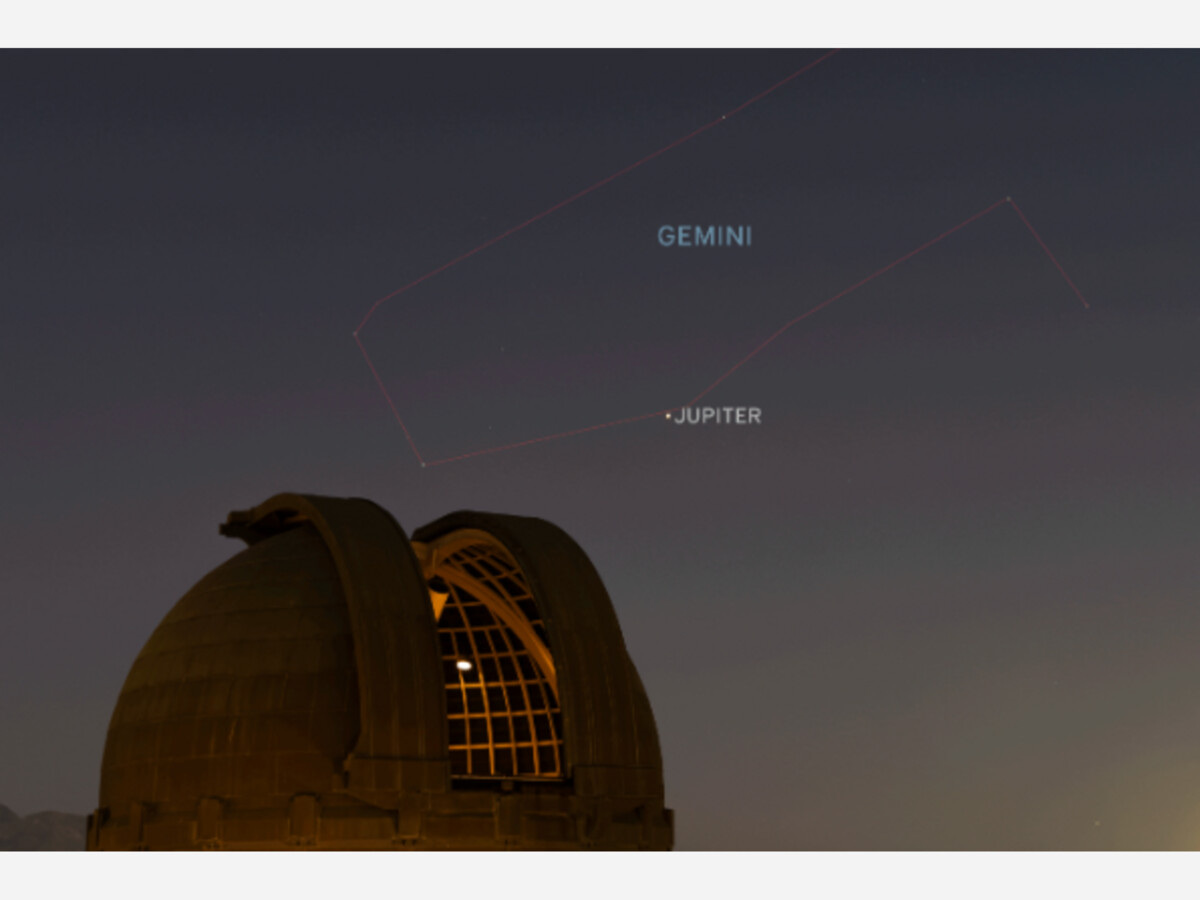



Our ancestors relied on their knowledge of the constellations, however they plotted them
Through their understanding of the stars' unchanging placement relative to one another, they noticed some of them wander. These wanderers are the "planets," as the ancient Greeks called them. Right now, Jupiter is wandering backwards into Gemini the Twins (above), but on March 11th, it'll start to drift the other way into Cancer the Crab—retrograde begone.
Stars move gradually....but not on a timescale relevant to your lifespan. Ancient people figured out that the Moon completes one orbital revolution about the Earth every 27.3 days (distinguished from its 29.5-day cycle of phases) by tracking the Moon's return to the exact same place among the stars.
You can carry a compass, a GPS, and the answer to all your questions in your pocket. Make a habit of watching the Griffith Observatory Sky Report, only about five minutes a month, and the sky will become more clear.


Sunny, with a high of 76 and low of 65 degrees. Sunny in the morning, clear during the afternoon and evening,